
Is Istanbul Safe in 2026? Honest Safety Guide + Solo Female Tips
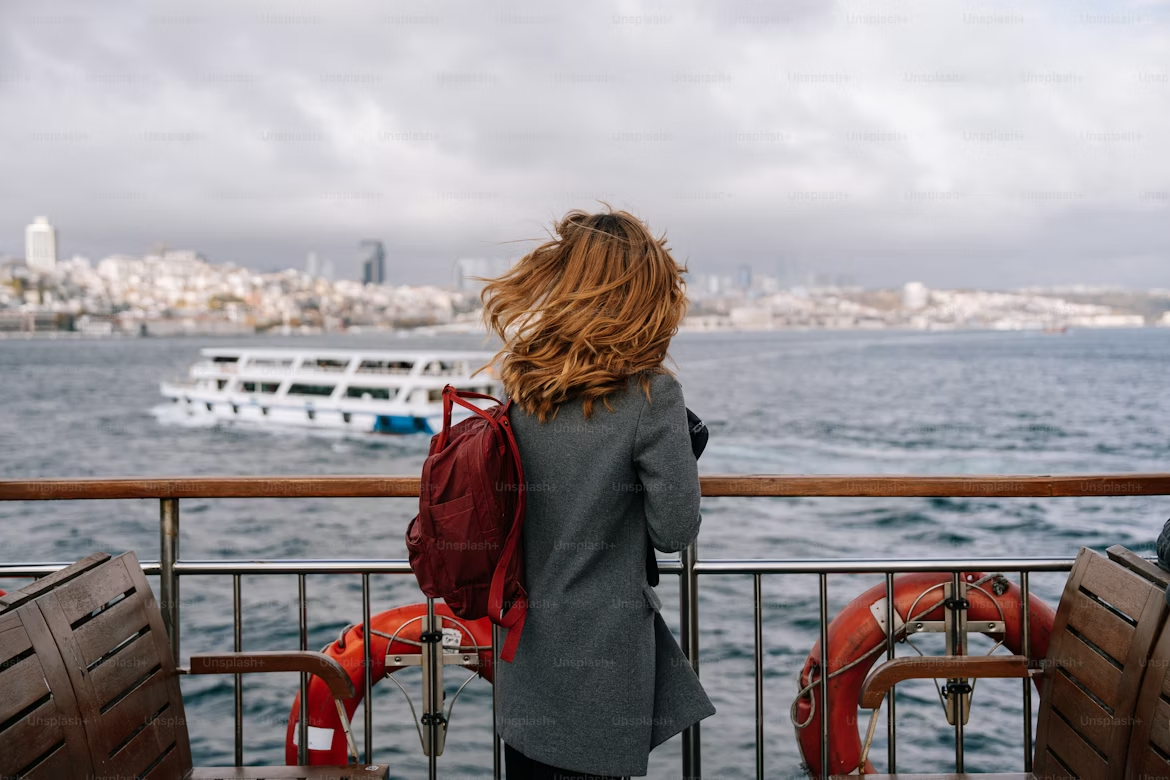
Istanbul is generally safe for tourists in 2026, ranking on par with most major European cities. The US State Department holds it at Level 2 ("Exercise Increased Caution") and the UK FCDO issues no broad warning for the city itself. Violent crime against visitors is rare; the real risks are pickpockets in Eminönü and on the T1, inflated taxi fares, and a handful of well-documented scams along Istiklal Avenue. Solo female travelers report Istanbul as comfortable when basic urban precautions are taken; Kadıköy, Karaköy, and Nişantaşı feel safe well into the night.
Quick facts
- Overall risk: Low for violent crime; moderate for petty crime and tourist scams in dense areas
- US State Dept advisory (April 2026): Level 2, Exercise Increased Caution
- UK FCDO advisory (April 2026): No broad warning for Istanbul; caution advised in crowded areas
- Unified emergency number: 112 (police, ambulance, fire; English-speaking operators on request)
- Tourism Police, Sultanahmet: Yerebatan Cad. No:2, next to the Basilica Cistern. 24/7. +90 212 527 45 03
- Taxi / municipal complaints: ALO 153 (IBB Beyaz Masa). English option available
- Women-only metro carriages: Do not exist; transit is fully mixed-gender
- Common scam hotspots: Istiklal Avenue, Sultanahmet tram exits, around the Galata Bridge
- Currency: Turkish Lira (₺). Card is accepted almost everywhere; carry small cash for bazaars and tea
Is Istanbul safe to visit in 2026?
Yes. Istanbul is one of the safer megacities a first-time traveler can visit in 2026. The violent crime rate is low, tourist-targeted assault is uncommon, and police presence in the historic and central districts is heavy and visible. The realistic threats are financial, not physical: pickpocketing in dense crowds, inflated taxi fares, and a small set of well-known scams aimed at people who look new to the city.
Both the US and UK governments treat Istanbul as safe for tourism. The advisories that do exist concern the southeastern Turkish border with Syria, over 1,200 km away, not Istanbul itself.
US State Dept Turkey advisory UK FCDO Turkey travel adviceMost visitors who feel "unsafe" in Istanbul are reacting to chaos and density, not actual danger. Crowds, traffic, and constant solicitation feel intense, but they are rarely a threat.
Which Istanbul neighborhoods are safe, and which to avoid at night?
Istanbul is a city of micro-zones; safety can shift street by street. The historic peninsula and the modernized districts on both sides of the Bosphorus are safe at all hours, while a small number of pockets adjacent to Taksim warrant care after dark.
| Neighborhood | Safety profile | Notes |
| Sultanahmet | Safe any time | Heavy police presence; busy until late |
| Karaköy & Galata | Safe any time | Trendy nightlife; well-traversed by locals and tourists |
| Nişantaşı / Şişli | Safe any time | Upscale residential and shopping; modern security |
| Kadıköy (Moda) | Safe any time | Asian side; relaxed café and bar streets |
| Cihangir | Safe any time | Bohemian, café-heavy, expat-popular |
| Beyoğlu side streets | Fine on main streets, caution on dark alleys | Stay on Istiklal and well-lit boulevards after midnight |
| Tarlabaşı | Caution after dark | Adjacent to Taksim; reported drug activity and street crime at night |
| Dolapdere | Caution after dark | Disadvantaged area; even local taxis avoid backstreets late |
| Aksaray / Laleli (late night) | Caution after midnight | Unregulated nightlife strip; aggressive touts and scams |
Istanbul safety often shifts by the street. As a rule, stay on main, well-lit boulevards. Once you turn into a dark, narrow side street in upper Beyoğlu, the safety profile can change rapidly.
A common mistake is assuming that "central" means "safe at any hour." Tarlabaşı sits a five-minute walk from Taksim Square but feels like a different city after midnight. Use a ride-hail app for the last leg of the night rather than walking through unfamiliar Beyoğlu side streets.
What are the most common scams in Istanbul?
The Istanbul scam playbook is small, well-documented, and almost entirely financial. None of the scams involve violence; they rely on social pressure, distraction, or fake authority. Recognizing the pattern defuses the scam instantly.
The "friendly bar" / menu scam
A well-dressed local, often male, strikes up conversation in English near Taksim Square or on lower Istiklal: "Where are you from? Let me show you a great bar nearby." The bar is real, but the menu has no prices; drinks billed at ₺5,291+ each, with bouncers blocking the door until payment. As of 2026, IBB and the police have launched an aggressive crackdown on inflated-menu bars, but the scam still operates on the side streets between Istiklal and Tarlabaşı.
Warning: Refuse any unsolicited offer to "show you" a bar, restaurant, or club. Locals who genuinely want to be helpful give directions, not escorts.
Shoeshine "dropped brush" trick
A shoeshine man walking past you "drops" a brush. You pick it up to be helpful; he insists on shining your shoes as a thank-you, then demands an inflated fee. Decline, walk on, do not pick up the brush.
Taxi fare tampering
The single biggest source of tourist complaints. Variants include the meter set to night rate ("gece" tariff) during the day, "broken" meters with a flat-rate quote, deliberately long routes, or short-changing on banknotes. The simplest defense is to skip street taxis entirely (see next section).
Currency switch on banknotes
A driver or shop clerk takes a ₺200 note, palms it, then claims you handed a ₺20. Count cash out loud and keep large notes separate from small ones.
Carpet & rug shop pressure
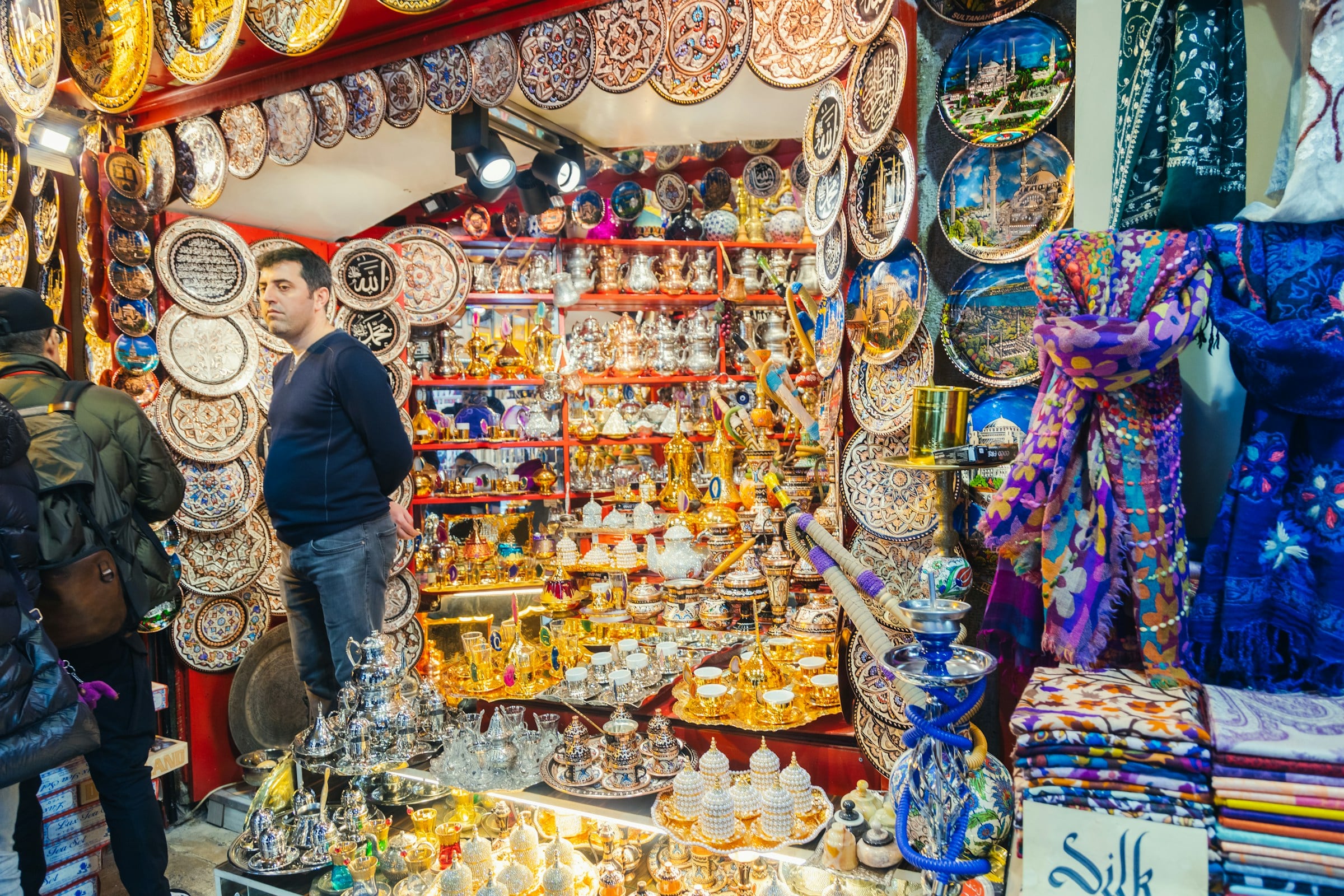
Not technically a scam, but the high-pressure carpet-shop pitch in the Grand Bazaar and around Hagia Sophia catches first-timers. The "free tea, just look" invitation often becomes a 90-minute pitch. Decline tea if you do not intend to buy.
Fake "tourism police"
Rare but reported: an individual flashes a fake badge and asks to "check your money for counterfeits." Real Tourism Police wear uniforms, work in pairs, and never ask to inspect cash. Walk to a populated area and call 112 if pressed.
How do you stay safe in taxis and on transit?
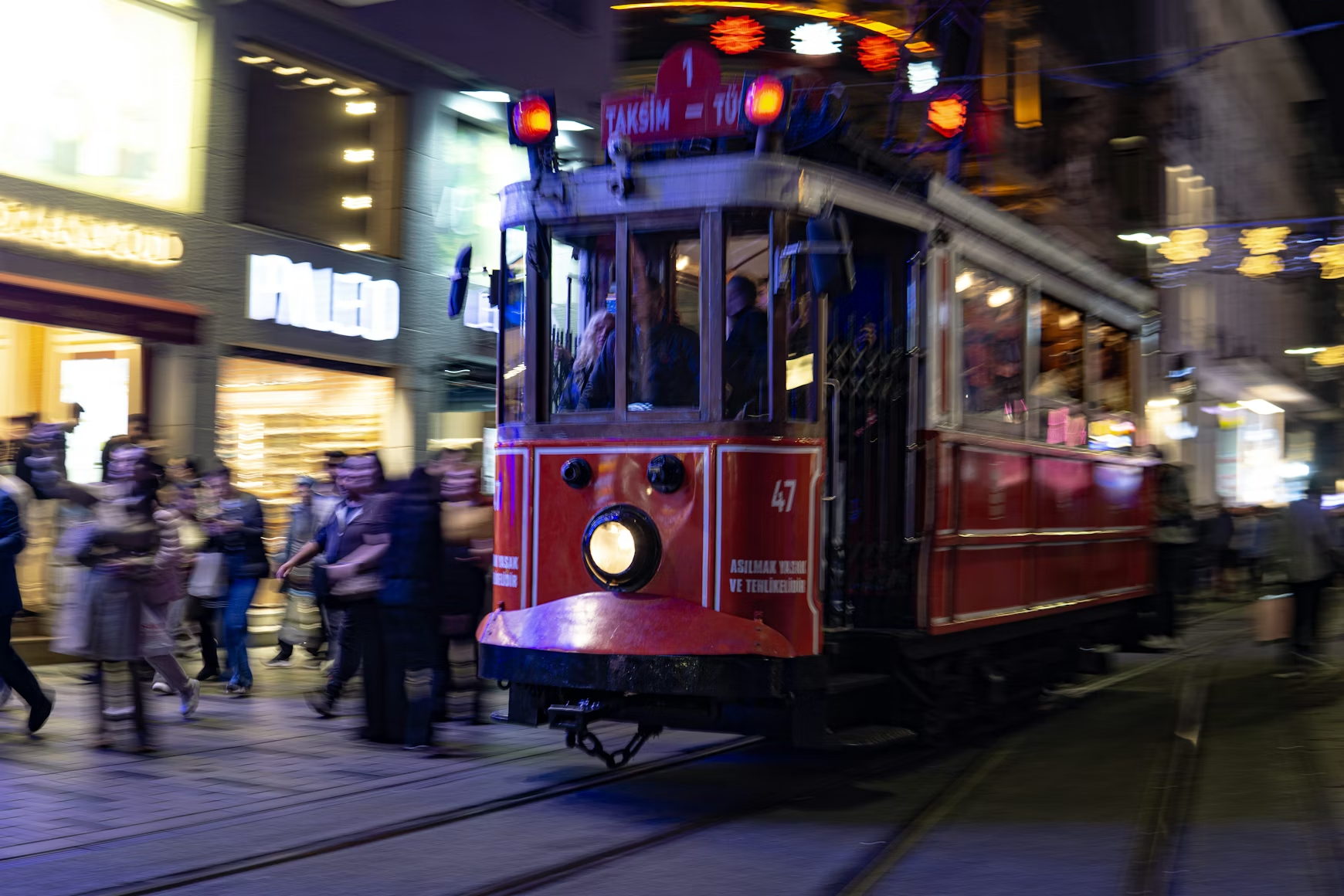
Skip street taxis. Public transit and ride-hail apps cover almost every tourist area in Istanbul, and both eliminate the most common scams. The T1 tram and the M2 metro line are the two arteries most visitors use, and both are safe at all hours; the only real concern is pickpockets in dense compartments.
| Option | Safety | When to use |
| BiTaksi (app) | High; locked-in fare, plate logged | Default for any taxi ride |
| Uber (app) | High; dispatches licensed yellow taxis only | Late night or with luggage |
| iTaksi (IBB official app) | High but slower adoption | Backup when BiTaksi has no cars |
| Hailed yellow taxi | Low; fare scams common | Avoid; if unavoidable, demand "taksimetre açık" |
| Public transit (tram, metro, ferry) | Very high | Default for all daytime trips |
BiTaksi remains the dominant private app in 2026 and is what locals use. iTaksi is the IBB-sanctioned municipal alternative, equally safe but with fewer cars on the street. Uber in Istanbul dispatches the same licensed yellow cabs but locks the meter and route through the app, which makes it the most foreigner-proof option of the three.
If a hailed taxi is the only option, the magic phrase is "taksimetre açık, lütfen" ("meter on, please") said immediately on entry. Refuse any "flat rate" quote; by Istanbul law, the meter must run.
Tip: Note the taxi's plate number before paying. If overcharged, dial ALO 153 (IBB Beyaz Masa, English option available) with the plate, route, and time. The municipality actively tracks reported drivers.
Where do pickpockets target tourists?
Pickpocketing concentrates in three places: the T1 tram between Sultanahmet and Eminönü stops, the Istiklal Avenue crowd around the Tünel funicular entrance, and the Galata Bridge fish-sandwich strip on weekends. Use a zipped crossbody bag in front of the body, keep phones out of back pockets, and stay aware when the tram is packed shoulder-to-shoulder.
Is Istanbul safe for solo female travelers?
Yes. Istanbul is one of the more comfortable major cities in the region for solo female travel in 2026. Verbal harassment exists but is moderate by global-megacity standards, no neighborhood is off-limits to a woman during the day, and the city's café and ferry culture makes spending time alone in public completely normal. The realistic challenges are catcalls in tourist-dense corridors, occasional unwanted "where are you from" approaches near Taksim, and reading the two distinct dress-code cultures that coexist in the city.
What should solo female travelers wear in Istanbul?
Istanbul is not a single dress code; it is at least two. Western neighborhoods (Beyoğlu, Cihangir, Karaköy, Beşiktaş, Kadıköy, Nişantaşı) are fully Western in dress; shorts, dresses, and tank tops attract no attention. Conservative neighborhoods (Eyüp, Fatih outside Sultanahmet, Çarşamba, the inner Fener streets) skew religious, and modest dress (shoulders and knees covered) attracts less attention.
| Area | Dress code |
| Beyoğlu, Cihangir, Karaköy, Kadıköy | Anything; fully Western |
| Sultanahmet (tourist core) | Modest preferred but no judgment for shorts |
| Inside any mosque | Headscarf required, shoulders and knees covered |
| Eyüp, Çarşamba, deep Fatih | Modest dress strongly recommended |
| Beach clubs, rooftop bars | Anything |
A lightweight scarf in the bag covers all mosque entries and any unexpected detour into a conservative quarter.
How common is street harassment in Istanbul?
Verbal catcalling does happen in tourist-dense corridors (Istiklal late at night, the Sultanahmet tourist strip, and around Taksim Square), but physical harassment is uncommon. The most effective deflection is the same as anywhere: ignore, do not engage, do not respond in any language. A cold "hayır" (no) and continued walking ends 99% of approaches.
Most unwanted attention in Istanbul is verbal and harmless. The line "looking for friend?" or "where are you from?" repeated by men sitting outside restaurants on Istiklal is solicitation for the menu scam, not a personal threat.
Are women-only metro or ferry carriages a thing in Istanbul?
No, and this is a common misconception. Istanbul does not have women-only carriages on the metro, metrobus, or ferries; transit is fully mixed-gender at all hours. Proposals for "Pink Metrobus" sections have surfaced politically over the years but were never implemented. Solo female travelers ride the same cars as everyone else.
How do hammams handle solo female visitors?
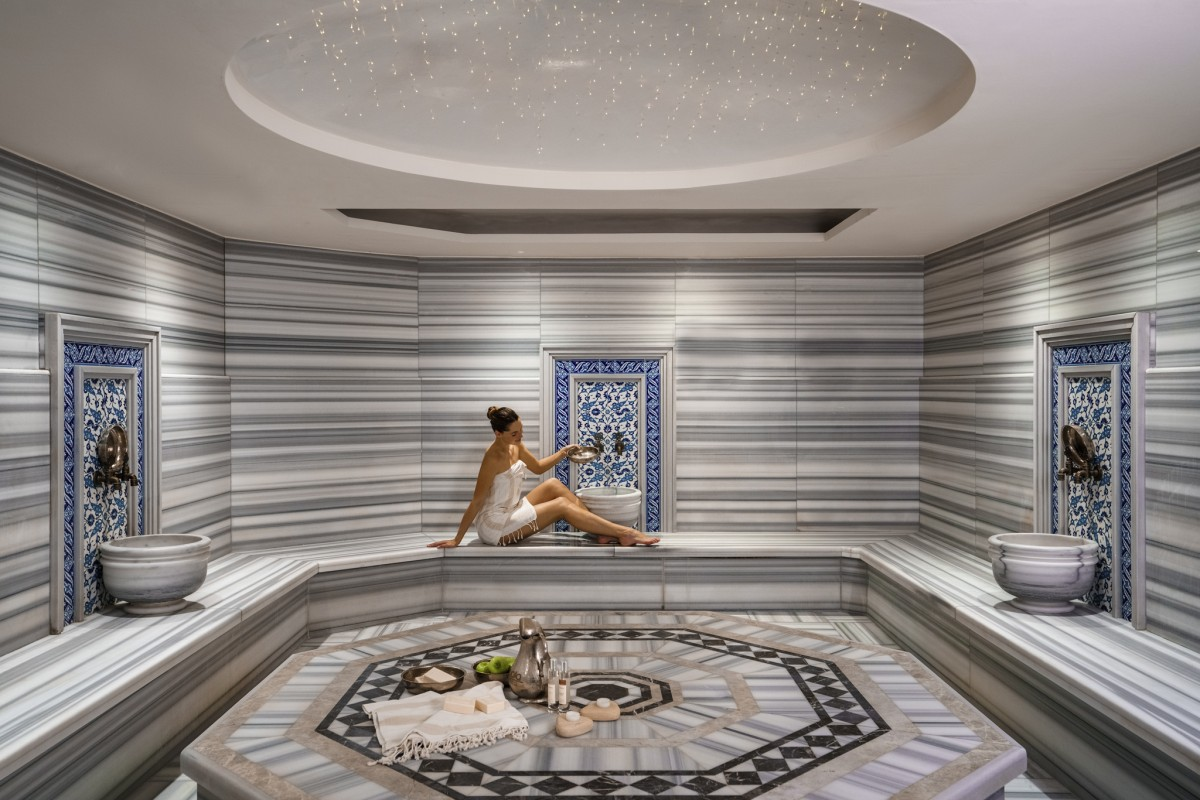
Istanbul's heritage hammams are not mixed-gender, but they handle separation in two different ways. Knowing which model a hammam uses prevents an awkward arrival.
| Hammam | Separation model | Notes |
| Kılıç Ali Paşa Hamamı | Time-split | Women in the morning/early afternoon, men in the evening; check the daily schedule |
| Çemberlitaş Hamamı | Physically separate wings | Both genders visit simultaneously in different sections |
| Ayasofya Hürrem Sultan Hamamı | Physically separate wings | Symmetric men's and women's sides; both open all day |
All three are safe, professionally staffed, and routinely used by solo female travelers. Female attendants ("natır") work the women's sections. A modest swimsuit underneath the supplied peştemal is fine; full nudity is also normalized.
Where should solo female travelers stay in Istanbul?
The four neighborhoods that work best for solo women in 2026 are Cihangir (cafés, walkable, expat-heavy), Karaköy / Galata (central, well-lit, near transit), Kadıköy / Moda (relaxed Asian side, café culture, ferry access), and Nişantaşı (upscale, very safe, slightly farther from sights). Sultanahmet is fine but empties out at night and is more transactional. Avoid bargain hostels in Aksaray and Laleli.
Is it safe to go out alone at night?
Solo female travelers go out alone in Istanbul without issue, especially in Karaköy, Cihangir, and Kadıköy where café-bar culture means a single woman with a book or laptop is unremarkable. Use BiTaksi or Uber for the trip home, and never accept an "I'll show you a bar" offer from a stranger on Istiklal (see the menu scam above).
Tip: A ferry crossing back from Kadıköy to Karaköy after dinner is one of the safest, most pleasant late-evening activities a solo traveler can do. Well-lit, populated, and ends at a transit hub.
What should you do in an emergency in Istanbul?
The unified emergency number is 112 for police, ambulance, and fire. As of 2026, dialing the old separate numbers (155 police, 110 fire) automatically redirects to 112 dispatch. English-speaking operators are available; say "English, please" and the call will be transferred.
| Situation | Number / Contact |
| Any emergency (police, ambulance, fire) | 112 |
| Tourism Police, Sultanahmet (24/7 walk-in) | Yerebatan Cad. No:2, +90 212 527 45 03 |
| Taxi scam, municipal complaint | ALO 153 (English available) |
| Lost or stolen passport | Your country's consulate (most are in Şişli/Beyoğlu) |
| Non-emergency police | 155 (still functional, redirects to 112) |
The Tourism Police office sits next to the Basilica Cistern entrance in Sultanahmet and is staffed 24 hours. Walk in for stolen-passport reports, scam complaints, or any incident where a written police report is needed for travel insurance. Most consulates also require a police report number before they will issue an emergency travel document.
Save 112 and the consulate number into the phone before arrival. Mobile data on Turkish SIMs (Turkcell, Vodafone, Türk Telekom) works reliably across central Istanbul, and most cafés have free Wi-Fi as a backup.
Frequently asked questions
Is Istanbul safe for tourists in 2026?
Yes. Istanbul is broadly safe for tourists in 2026. Violent crime against visitors is rare, the US State Department holds Turkey at Level 2 (Exercise Increased Caution) with no specific Istanbul warning, and the UK FCDO issues no broad advisory against the city. The realistic risks are pickpocketing, inflated taxi fares, and a handful of well-known scams on Istiklal Avenue.
Is Istanbul safe for solo female travelers?
Yes. Solo female travelers report Istanbul as comfortable in 2026, with moderate verbal harassment in tourist-dense corridors but rare physical incidents. Stay in Cihangir, Karaköy, Kadıköy, or Nişantaşı, use BiTaksi or Uber at night, and carry a lightweight scarf for mosque visits and conservative neighborhoods.
What is the emergency number in Istanbul?
Dial 112 for any emergency in Istanbul (police, ambulance, or fire). The line has English-speaking operators; say "English, please" and the call is transferred. The old separate numbers (155 police, 110 fire) still work and automatically redirect to 112 dispatch.
Which Istanbul neighborhoods should tourists avoid at night?
Tarlabaşı, Dolapdere, and the Aksaray–Laleli strip after midnight are the three areas to avoid walking through after dark. They sit close to central tourist zones but have higher rates of street crime, drug activity, and aggressive touts at night. Use a ride-hail app instead of walking through them late.
Are taxis in Istanbul safe?
Hailed street taxis in Istanbul are the single biggest source of tourist scam complaints. Fare tampering, "broken" meters, and inflated quotes are common. Use BiTaksi, Uber, or iTaksi instead; all three lock in the fare and log the plate. If a hailed taxi is unavoidable, say "taksimetre açık, lütfen" ("meter on, please") immediately.
What is the most common tourist scam in Istanbul?
The "friendly bar" or menu scam is the most common high-cost scam. A stranger offers to take you to a great bar near Taksim; the bar has no menu prices and bills drinks at ₺5,291+ each, with bouncers blocking the door until payment. Refuse any unsolicited offer to be shown a bar, restaurant, or club.
Do women need to cover their hair in Istanbul?
No, except inside mosques. Istanbul is a secular city with mixed dress codes; Western neighborhoods like Beyoğlu, Karaköy, and Kadıköy are fully Western in dress. A headscarf is required only when entering mosques, and conservative neighborhoods like Eyüp or deep Fatih warrant modest dress (shoulders and knees covered) for comfort.
Is it safe to walk around Istanbul at night?
Yes, on main boulevards in central districts. Sultanahmet, Karaköy, Galata, Cihangir, Nişantaşı, and Kadıköy are safe to walk after dark. Avoid dark side streets in upper Beyoğlu, the Tarlabaşı–Dolapdere area, and the Aksaray–Laleli strip late at night. Use a ride-hail app for the last leg of any night out.
Are there women-only metro carriages in Istanbul?
No. Istanbul does not have women-only carriages on the metro, metrobus, tram, or ferries; transit is fully mixed-gender at all hours. Political proposals for "Pink Metrobus" sections have surfaced over the years but were never implemented.
How do you report a taxi scam in Istanbul?
Note the taxi's plate number, then dial ALO 153 (the IBB Beyaz Masa municipal complaint line). An English-speaking option is available. Provide the plate number, route, time, and overcharge amount; the municipality actively tracks and penalizes reported drivers. For serious incidents, also file a report at the Tourism Police office in Sultanahmet (Yerebatan Cad. No:2).