
Adana Kebab: The Essential Guide for Istanbul Visitors
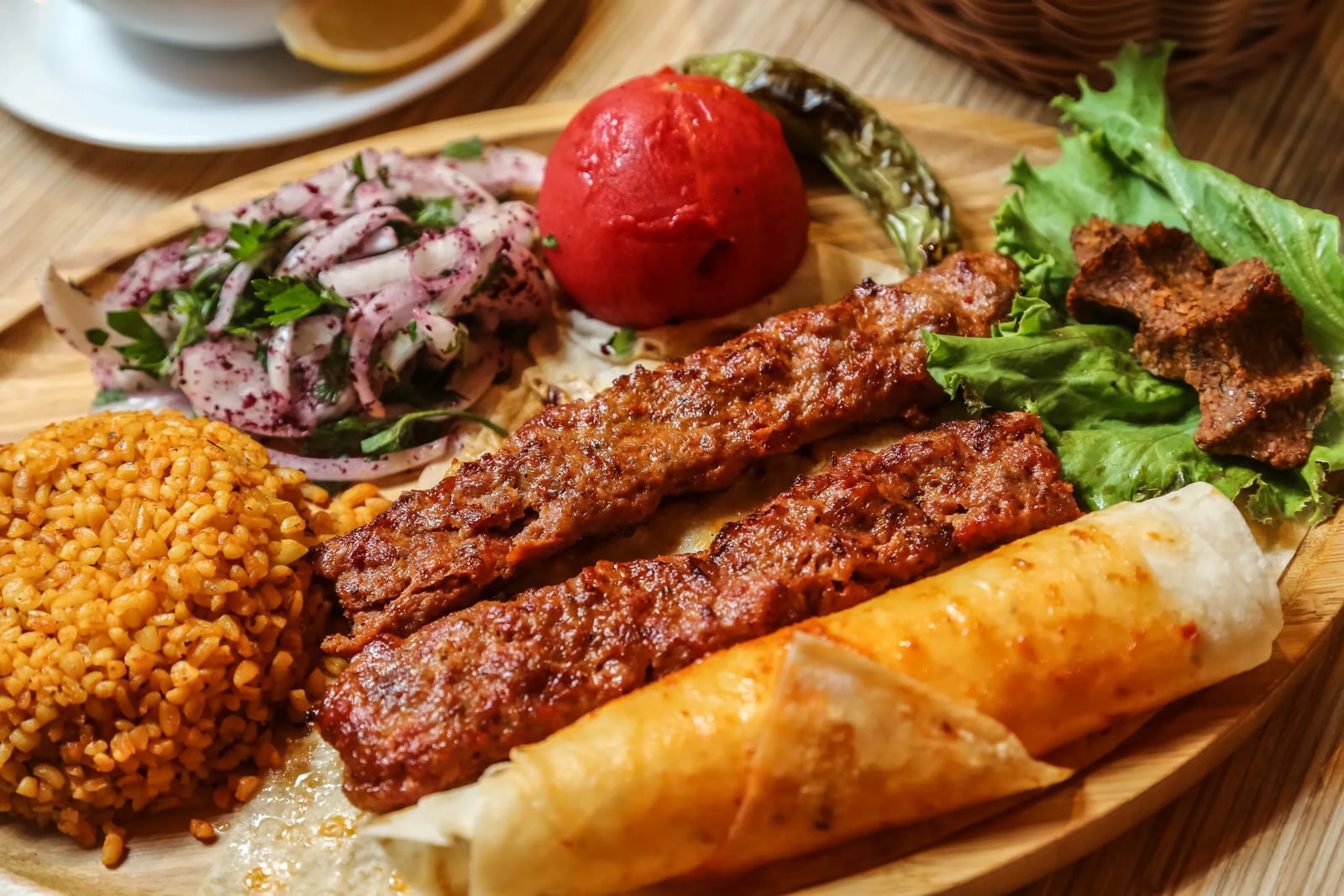
Quick Snapshot
- Category
- Main Dish
- Price Range
- $$ (Mid-Range)
Adana kebab is the fiery flagship of southeastern Turkish cuisine — hand-minced lamb pressed onto wide flat skewers, laced with red pepper flakes, and charcoal-grilled until the edges char and the fat renders into the meat. It is one of the most respected dishes in Turkey, and in Istanbul it is everywhere, from smoke-filled ocakbasi grills in Beyoglu to backstreet kebab joints on the Asian side.
The Story Behind Adana Kebab
The dish takes its name from Adana, Turkey's fifth-largest city, located on the fertile Cilician plain where the Seyhan River meets the Mediterranean heat. This is a region where hot peppers grow in abundance and lamb is the dominant protein, and the kebab that emerged from this landscape reflects both. Unlike most ground-meat kebabs around the world, authentic Adana kebab is never run through a machine grinder. The meat — always lamb — is hand-minced on a large stone slab called a zirh tasi, using a pair of heavy crescent-shaped cleavers. This laborious technique produces an irregular, coarse texture that allows the meat to breathe on the grill, keeping it juicy while developing a smoky crust.
The other defining element is kuyruk yagi — rendered tail fat from a fat-tailed sheep breed native to the region. Mixed into the minced meat at roughly a one-to-four ratio, it melts during grilling and bastes the kebab from within, giving it a richness that no other fat can replicate. The spice level is where the famous rivalry with neighboring Urfa begins. Adana kebab uses pul biber (red pepper flakes) for a noticeable kick, while Urfa kebab uses isot biber (dark, smoky Urfa pepper) and omits the heat entirely. Ask for "Adana" and you are choosing the spicy path; ask for "Urfa" and you get the mild one. Locals in Adana consider this distinction a matter of civic pride.
By the mid-20th century, waves of migration from southeastern Turkey brought Adana kebab masters to Istanbul, where the dish found a massive new audience. Ocakbasi restaurants — open-grill houses where diners sit around a central charcoal pit — became the natural home for the kebab in the city, and today Istanbul arguably has more great Adana kebab spots than Adana itself.
Why You Must Try It in Istanbul
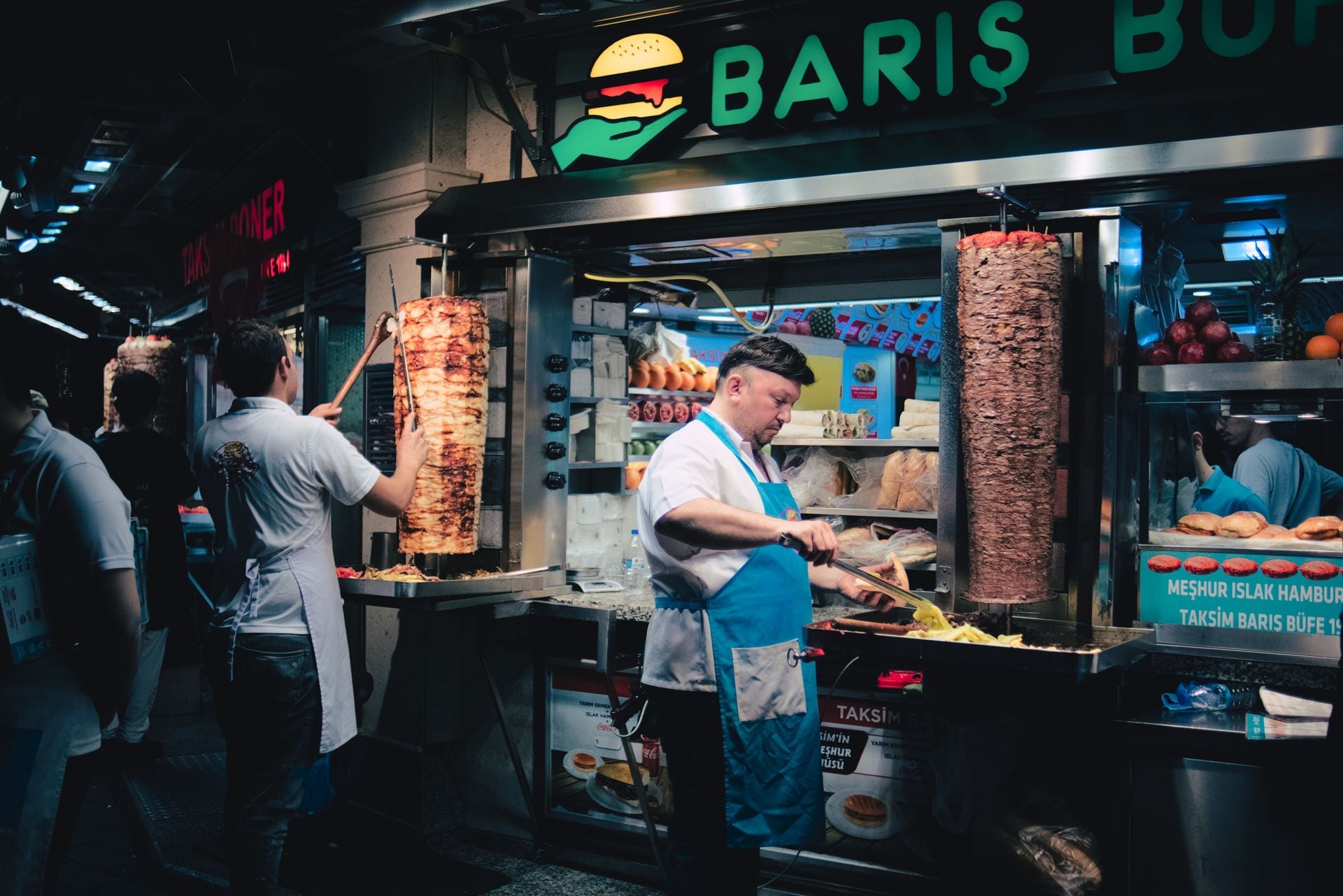
Istanbul's ocakbasi culture means you can watch your Adana kebab being shaped by hand, pressed onto the skewer, and grilled over hardwood charcoal just a few feet from your table. The best places still insist on hand-mincing the meat in-house each morning, and the difference between that and a machine-ground version is immediately obvious — a rougher, juicier, more flavorful bite with an honest charcoal smokiness.
The city also gives you something Adana itself cannot: variety in a single evening. You can start with a bowl of ezogelin soup, move to an Adana kebab with haydari and grilled peppers on the side, and wash it all down with cold ayran — pulling together flavors from across the country at one table.
Ingredients & Preparation
- Meat 🥩 — hand-minced lamb (never beef in the traditional version), with tail fat from fat-tailed sheep
- Spices 🌶️ — red pepper flakes (pul biber), salt, and sometimes a small amount of black pepper or sumac — the spice list is deliberately short to let the meat speak
- Skewer 🔥 — wide, flat metal skewers that allow the meat to be pressed thin for maximum charcoal contact
- Accompaniments 🥬 — lavash or pide bread, grilled tomatoes and long green peppers, thinly sliced purple onion with sumac, fresh parsley, and a squeeze of lemon
The hand-minced lamb and tail fat are kneaded together with the spices until the mixture becomes cohesive enough to press onto the flat skewer without falling off. The kebab is grilled close to hot charcoal, turned frequently, and served immediately. It should arrive slightly charred on the outside, pink and juicy within, with visible flecks of red pepper throughout.
Best Places to Try Adana Kebab in Istanbul
| Spot | Neighborhood | Known For |
| Adana Ocakbasi | Beyoglu | Authentic open-grill experience with hand-minced meat and fiery spice levels |
| Zubeyir Ocakbasi | Beyoglu | One of the city's most respected ocakbasi restaurants, consistently excellent kebabs |
| Sehzade Cag Kebabi | Fatih | Famous for cag kebab but serves a superb smoky Adana with generous portions |
| Ciya Sofrasi | Kadikoy | Legendary Asian-side kitchen that rotates regional specialties alongside a first-rate Adana |
Insider Tips: Eat Like a Local 🧳
- Specify your spice level. At most ocakbasi restaurants you can ask for aci (spicy), orta (medium), or even request a mixed plate of Adana and Urfa kebab side by side to taste the difference.
- Wrap, don't cut. Tear a piece of lavash bread, lay some kebab meat on it with a bit of onion and parsley, squeeze lemon over the top, and eat it with your hands. Using a knife and fork is not wrong, but the bread-wrap method is the local way.
- Order ayran with it. The cold, salty yogurt drink cuts through the richness and heat better than anything else. This is the textbook pairing.
- Look for hand-minced meat. Restaurants that mince in-house will often advertise it — zirh or el yapimi on the menu. Machine-ground versions lack the coarse texture that defines a proper Adana kebab.
- Do not skip the grilled peppers. The long green peppers served alongside are mildly bitter and slightly charred — they are there to cleanse your palate between bites, not as decoration.
Frequently asked questions
What is Adana kebab made of?
Authentic Adana kebab is hand-minced lamb mixed with rendered tail fat (kuyruk yagi) from a fat-tailed sheep breed, seasoned with red pepper flakes (pul biber), salt, and sometimes a little black pepper or sumac. The meat is never run through a machine grinder — it is minced by hand on a stone slab using heavy crescent-shaped cleavers, then pressed onto wide flat skewers and grilled over charcoal.
What is the difference between Adana and Urfa kebab?
The difference is heat. Adana kebab uses pul biber (red pepper flakes) for a noticeable kick, while Urfa kebab uses isot biber (dark, smoky Urfa pepper) and omits the heat entirely. Ask for "Adana" and you choose the spicy path; ask for "Urfa" and you get the mild one. At many ocakbasi restaurants you can order both side by side on a mixed plate to taste them against each other.
Is Adana kebab spicy?
Yes — spice is the dish's defining characteristic. That said, you can specify your spice level when ordering: aci (spicy, the default), orta (medium), or request a mixed plate of Adana and Urfa to dial back the heat. The red pepper flakes are visible as flecks throughout the meat.
Where can I try the best Adana kebab in Istanbul?
Reliable picks include Adana Ocakbasi in Beyoglu for the authentic open-grill experience with hand-minced meat, Zubeyir Ocakbasi in Beyoglu for one of the city's most respected ocakbasi kitchens, Sehzade Cag Kebabi in Fatih for a smoky version with generous portions, and Ciya Sofrasi in Kadikoy for a first-rate Adana on the Asian side.
Is Adana kebab made with beef?
No. Authentic Adana kebab is always lamb — never beef in the traditional version — combined with rendered tail fat from fat-tailed sheep at roughly a one-to-four ratio. The fat melts during grilling and bastes the kebab from within, which is why other fats cannot replicate the flavor.
What should I drink with Adana kebab?
Cold ayran is the textbook pairing — the salty yogurt drink cuts through the richness and heat of the kebab better than anything else. Locals reach for it ahead of beer or soda when the meal involves charcoal-grilled meat.