
Istanbul funicular guide: F1, F2, F3 & F4 lines
Following the February 16, 2026 funicular fares are now ₺42. The cost to purchase a new Istanbulkart has risen to ₺165.
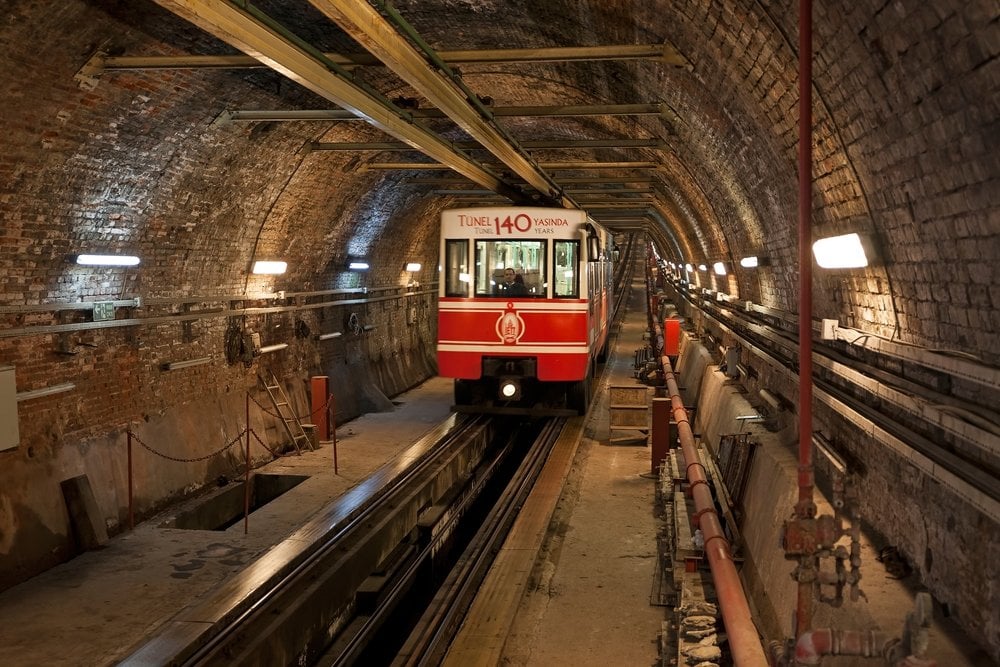
Istanbul has four funicular lines (known locally as füniküler), including the Tünel (F2), the world's second-oldest underground railway, running since 1875. A funicular is a short cable railway where two cars counterbalance each other: as one ascends, the other descends. There's no risk of boarding in the wrong direction. Each car waits at its end station, fills up, and goes.
All four lines accept Istanbulkart for payment.

Each line has a designated color and code, and all funicular codes start with the letter "F". Here's a comparison of all four lines:
| Line | Route | Best For | Connections |
| F1 | Taksim ↔ Kabataş | Reaching Sultanahmet & Blue Mosque | T1 Tram, M2 Metro |
| F2 | Karaköy ↔ Beyoğlu | Historic Istiklal Street | T1 Tram, Nostalgic Tram |
| F3 | Seyrantepe ↔ Vadistanbul | Shopping (Vadistanbul Mall) | M2 Metro |
| F4 | Hisarüstü ↔ Aşiyan | Bosphorus Views & Rumeli Hisarı | M6 Metro, Bosphorus Ferry |
Which funicular should you take?
| If you are at… | And want to go to… | Take |
| Taksim Square | Sultanahmet, Blue Mosque, Grand Bazaar (via T1 Tram) | F1 → Kabataş |
| Taksim Square | Dolmabahçe Palace | F1 → Kabataş (5-min walk) |
| Karaköy (Galata Bridge area) | Istiklal Street, Galata Tower | F2 → Beyoğlu |
| M2 Metro (Seyrantepe) | Vadistanbul Shopping Mall | F3 |
| M6 Metro (Boğaziçi University) | Rumeli Hisarı fortress, Bosphorus ferry | F4 → Aşiyan |
F1 Taksim funicular (Taksim–Kabataş): the shortcut to Sultanahmet
The F1 funicular connects Taksim Square with Kabataş, covering a 640-meter route in about 2.5 minutes. Opened on June 29, 2006, the F1 is the second funicular line built in Istanbul, 131 years after the Tünel (F2), which opened in 1875.
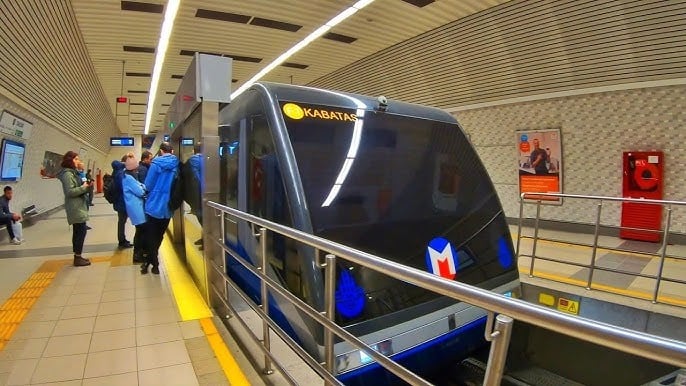
- 🏆 Best way from Taksim to Sultanahmet: Take the F1 down to Kabataş, then the T1 tram toward the Blue Mosque and Grand Bazaar. No steep uphill walking required.
- 🏛️ Kabataş to Dolmabahçe Palace: A 5-minute walk from Kabataş station, making the F1 the easiest way to reach the palace from Taksim.
- ⌚ Operates daily from 06:00 to 00:00. Trains run every 5 minutes during peak hours and every 8 minutes off-peak.
- 🔄 Taksim station connects to the M2 metro line and the T2 tram line.
- ⚓ Kabataş station connects to the T1 tram line, as well as ferry and seabus services.
F2 Tünel: Istanbul's 150-year-old underground
The F2 (also called Tünel) has been operational since 1875 and is the world's second-oldest underground railway, after the London Underground. The Tünel connects Karaköy at the waterfront with Beyoğlu (Tünel Square) at the top of the hill in about 90 seconds. The ride is entirely underground, so don't expect views, but the cars have a nostalgic wooden interior that makes the short trip feel like a step back to the 19th century.
What's at the top (Beyoğlu station): The Tünel exits directly onto Istiklal Street, Istanbul's pedestrian avenue. Galata Tower is a 5-minute walk from the station, making F2 one of the most useful lines for sightseeing.
Finding the Karaköy entrance: The Tünel entrance sits inside a building and is easy to miss if you're looking for a standard metro-style sign. Don't look for a metro pole. Look for the white building across from the Galata Bridge with "TÜNEL" written in large letters, near Bankalar Caddesi.
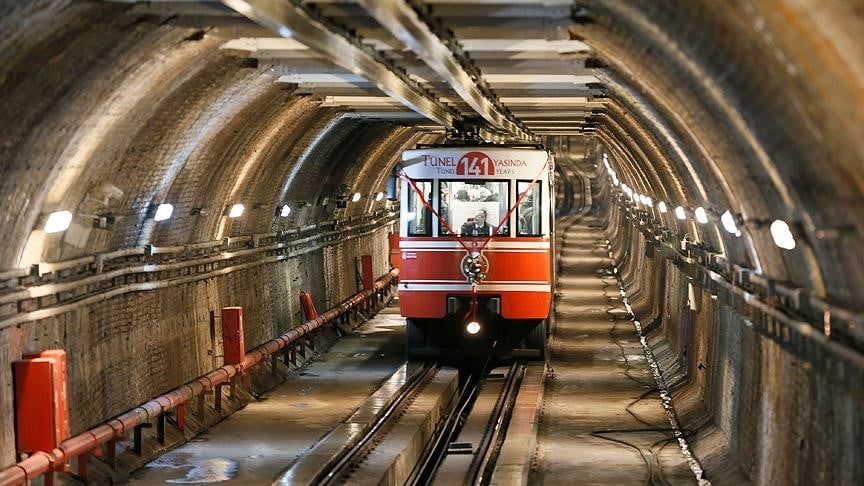


- ⌚ Mon–Sat: 07:00–22:45 | Sun: 07:30–22:45. The Tünel closes earlier than other funicular lines, so plan your evening accordingly.
- 👨🔧 French engineer Eugene Henri Gavand led the construction of the funicular to link the then-prominent business districts.
- 📅 Sultan Abdülaziz approved the project in 1869, and the funicular was officially inaugurated on January 17, 1875.
F3 Seyrantepe–Vadistanbul
The F3 is a 750-meter funicular that connects Seyrantepe with Vadistanbul Shopping Mall. Note for tourists: The F3 is mainly a commuter link to the Vadistanbul shopping complex and doesn't lead to any historic sites. If you're heading to the mall, take it. Otherwise, the F1, F2, or F4 are more useful for sightseeing.
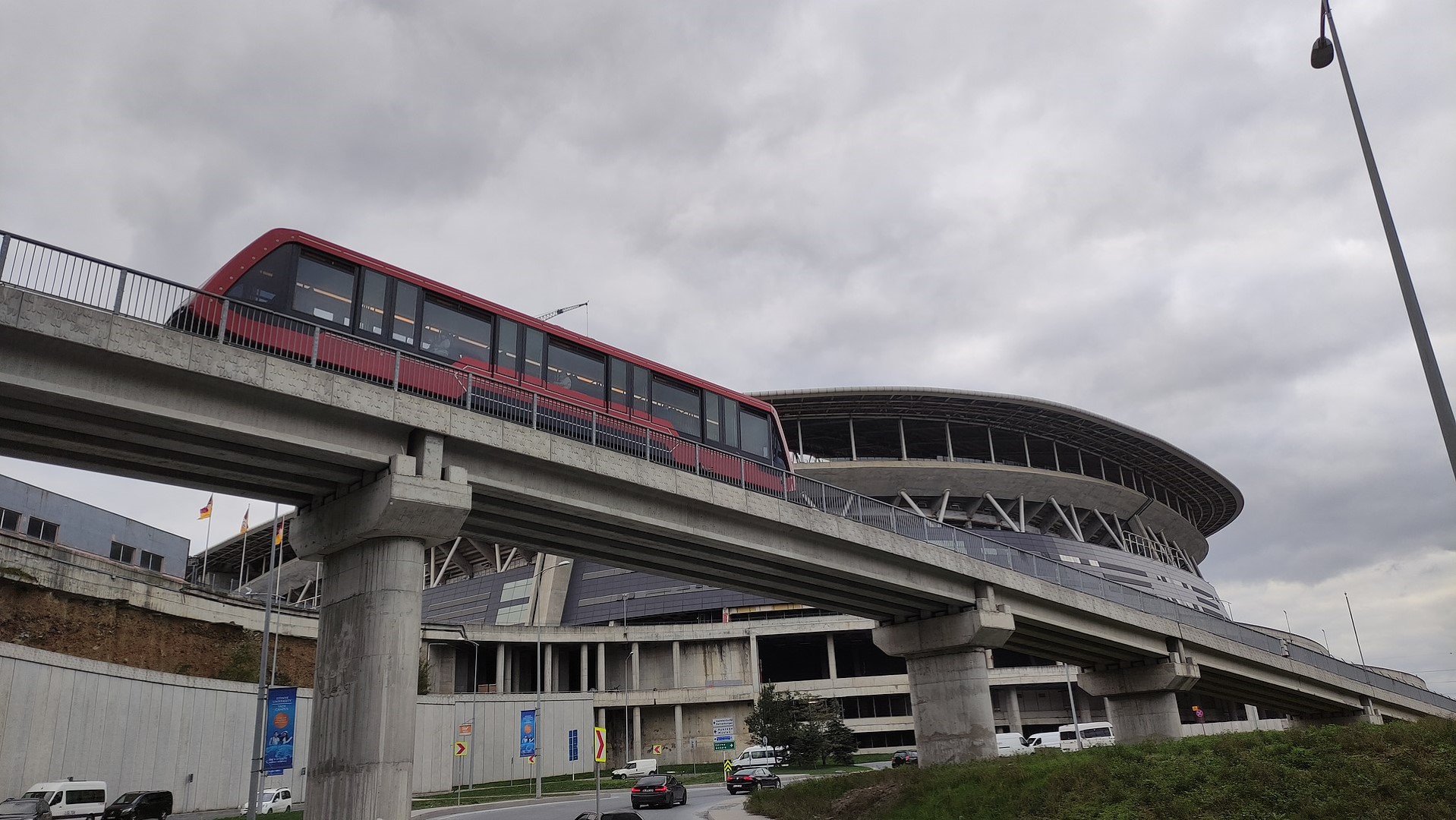
- 🚡 The F3 line covers a 750-meter route between Seyrantepe and Vadistanbul in about 2.5 minutes.
- ⏱️ The line runs from 07:20 to 23:10, with trains every 10 minutes during peak hours, averaging 100 trips per day.
- 🚉 Seyrantepe station, in Sarıyer, connects to the M2 metro line and is close to Ali Sami Yen Sports Complex, Skyland Istanbul, and Nurol Life buildings.
- 🛍️ Vadistanbul station is integrated into the Vadistanbul Shopping Mall.
F4 Boğaziçi Üniversitesi–Aşiyan
The F4 connects Boğaziçi University/Hisarüstü with Aşiyan, covering 800 meters in about 3 minutes. The F4 is the most scenic funicular for tourists who want to reach the Bosphorus shoreline, dropping you right at the water's edge and avoiding the steep, winding roads down from the metro on foot.
Rumeli Hisarı: Once you exit at Aşiyan station, Rumeli Hisarı fortress is a flat 5–7-minute walk (around 400–500 meters) north along the coast. The path hugs the Bosphorus shore, making it a pleasant walk in its own right.
Plan ahead: Rumeli Hisarı fortress is closed on Mondays. Check the day before making the trip.
The "Bosphorus Loop" route: A popular combination for visitors is to take the M6 metro from Levent, ride the F4 down to Aşiyan, visit the fortress, then walk along the water toward Bebek. From Aşiyan station you can also catch a ferry to the Asian side (Kandilli or Anadolu Hisarı).
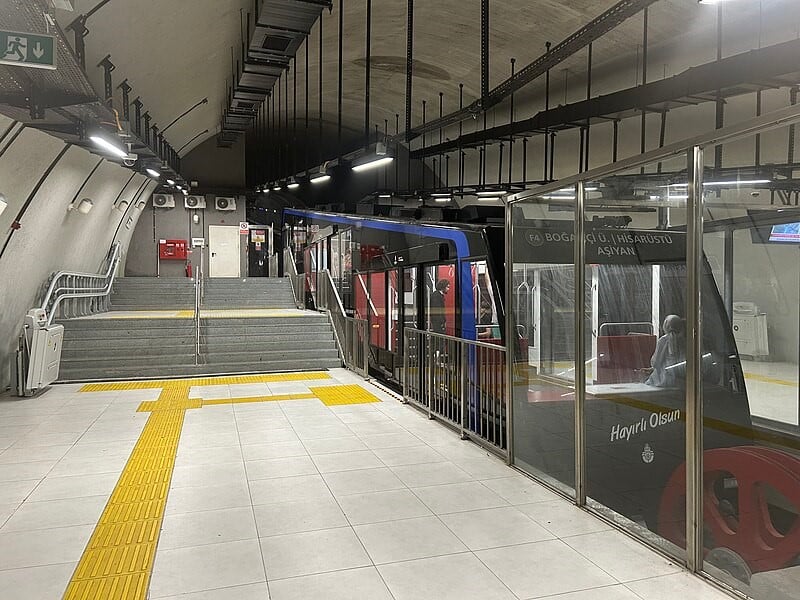
The F4 integrates with the M6 at Boğaziçi University/Hisarüstü station and with Istanbul City Lines' Aşiyan Pier at Aşiyan station.
- ⌚ Operates daily from 06:00 to 00:00 with an 8-minute headway.
- 🎓 Boğaziçi University/Hisarüstü station: An underground station in Beşiktaş, integrated with the M6 metro line.
- 🏞️ Aşiyan station: An above-ground station in Beşiktaş, integrated with Istanbul City Lines' Aşiyan Pier.
How much does the funicular cost in Istanbul (2026)?
Following the February 16, 2026 city-wide transport fare update, all funicular lines cost ₺42 per trip.
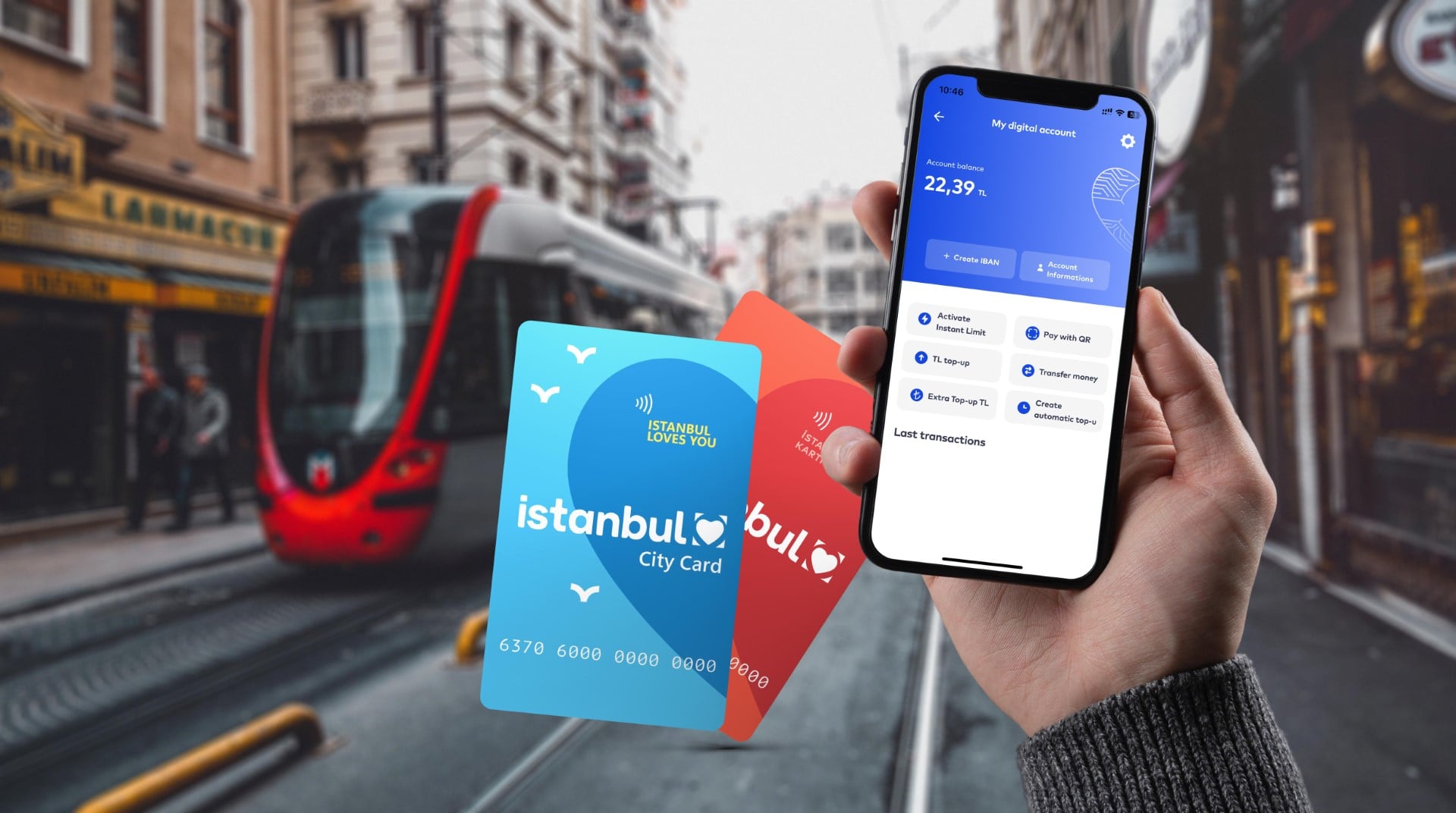
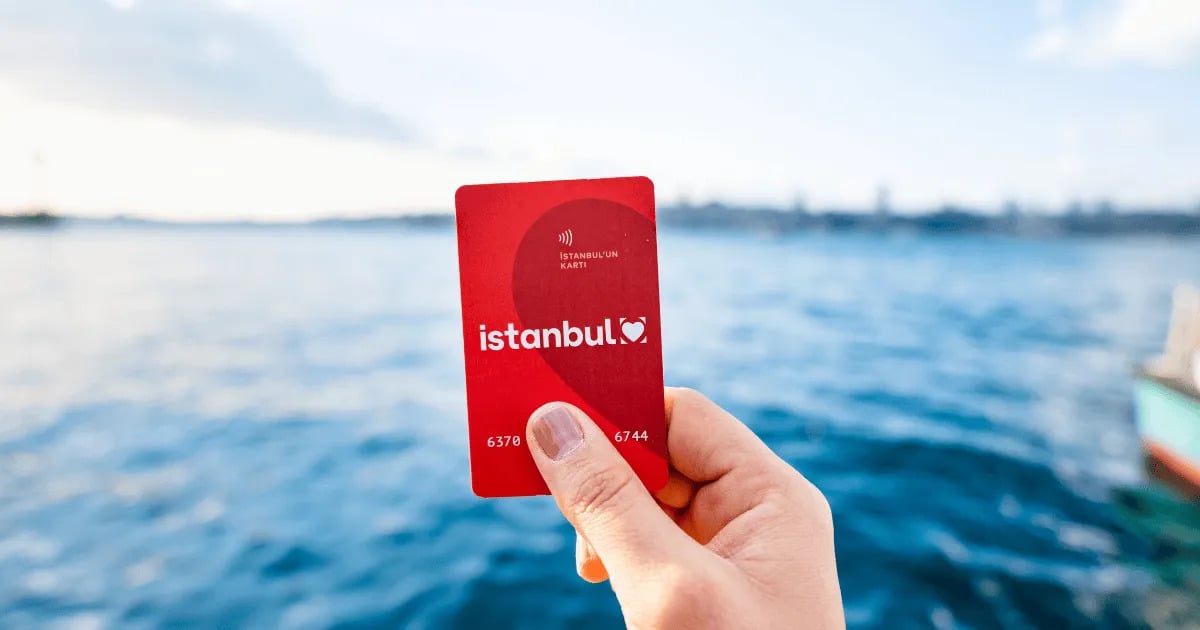
The cheapest way to pay is with an Istanbulkart. Tap it at the turnstile before boarding. The physical Istanbulkart card itself costs ₺165 to purchase, so budget for that before adding any fare balance.
Short stay? Use a Limited-Use Card instead. If you're only in Istanbul for a day or two, the ₺165 card fee may not be worth it. Look for the yellow Biletmatik vending machines at stations. They sell Limited-Use Cards preloaded with a set number of trips, with no upfront card purchase fee.
You can tap a Visa or Mastercard at most F1 and F2 stations, but the fare is much higher than the ₺42 Istanbulkart rate, and not every station supports it yet. Don't rely on contactless bank cards as your primary payment method.
Frequently asked questions
Is the funicular included in the Day Pass?
Yes, all four funicular lines are part of the Istanbul public transport network and are included in the limited-use passes.
Can I use my contactless Visa/Mastercard?
You can tap a Visa or Mastercard at most F1 and F2 stations, but the fare is significantly higher than the ₺42 Istanbulkart rate, and not all stations support it yet. It works as a backup, but an Istanbulkart or Limited-Use Card is a much better deal if you'll be using public transport more than once.
Is the Tünel (F2) wheelchair accessible?
The Tünel is historic and has limited accessibility. For modern accessible routes, the F1 (Taksim-Kabataş) is a better option with elevators.
How long is the Tünel (F2) ride?
About 90 seconds, one of the shortest railway rides in the world. The line is fully underground, so there are no views, but the historic wooden cars make it a worthwhile experience in itself.
What is near Kabataş station (F1)?
Kabataş connects to the T1 tram line (toward Sultanahmet, Blue Mosque, and Grand Bazaar) and to ferry and seabus services. Dolmabahçe Palace is a 5-minute walk from the station.
Can I board the funicular in the wrong direction?
No. Each funicular has only two stations, and the car waits at each end. You simply board and go. The two cars pass each other midway along the track.
If you're exploring Istanbul's public transport network, check out our guides to the metro, tram, and cable car lines.